

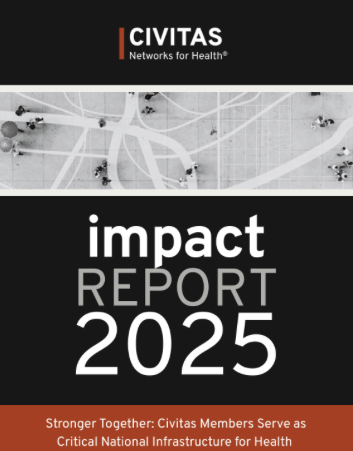
 Civitas Networks for Health Ⓡ, a network of 160+ organizational members including Health Information Exchanges (HIEs), emerging HDUs, Community Information Exchanges (CIEs), Regional Health Improvement Collaboratives (RHICs), All Payer Claims Databases (APCDs), Quality Improvement Organizations (QIOs) and other multi-stakeholder groups, released its first Impact Report in January of 2026, reflecting on progress since Civitas inception in 2001.
Civitas’ mission to promote the nation’s health by building strong links between communities and organizations that move and use data to address health care cost, quality, safety, and upstream drivers of health, makes this an organization to stay engaged with from a public health perspective and aligns well with the objectives in CDCs public health data strategy and Data Modernization efforts at STLTs.
Of note from the report is how the networks experienced growth and enhanced engagement through various events and collaborations, how the members influenced national conversations on data exchange and health improvements, including public health, and provided opportunities and pathways for aligned groups to work together on key priorities, overcoming barriers, and developing health solutions. The report also includes measures for the identified impacts, which is admirable in itself and worth taking a closer look at.
Relevant for public health to note from the 2025 impacts report:
- The launch of a centralized hub, the commons, with implementation tools, policy templates etc to help states and communities advance health information interoperability. The commons fosters collaboration among State Health IT leaders and agencies and improves alignment between organizations and state Health IT leaders.
- The collection of insights from HIOs through a National HIO survey. The survey provides an overview of the current state of health information sharing and helps inform stakeholders about existing capabilities and gaps.
- Advancement of a national initiative to modernize demographic data standards, the Demographic Data Element Modernization (DEMo) initiative. This initiative represents a productive step toward more inclusive and effective health information capture.
- Initiated a Public Health Data Landscape assessment to evaluate how changes to federal webpages affected their organization’s ability to access and utilize data. The result from this survey will provide valuable insights into how HIEs and other data organizations can provide a comprehensive view of health data to potentially address the gaps created by the removal of federal resources. Results and recommendations will be published in early 2026.
- Coordinated public comments and inputs to the HDU Capability model (See HLN’s comments about this). The HDU Capability model was developed by the Consortium for State and Regional Interoperability (CSRI) with input from Civitas leaders, members and industry contributors.